



Upon ESR1m detection,
Switch to ETCAMAH–a convenient, once-daily oral tablet taken in combination with any FDA-approved CDK4/6i1
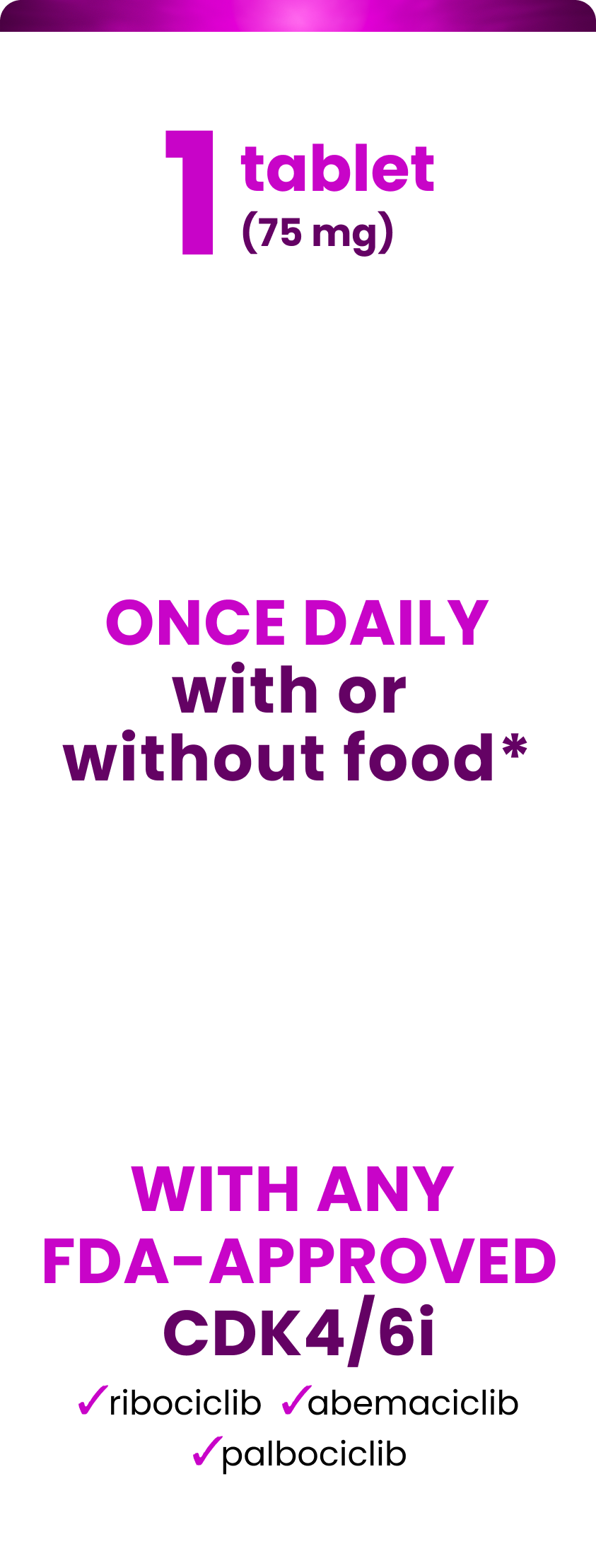
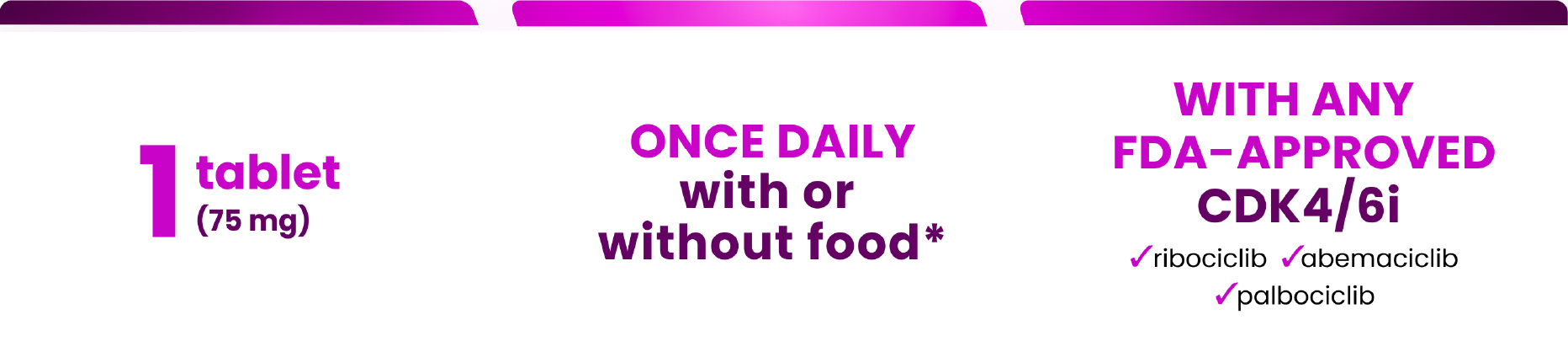
*For patients with severe hepatic impairment receiving ETCAMAH in combination with ribociclib, dose 75 mg once every other day.1
Avoid concomitant use of strong CYP3A inducers and moderate CYP3A inducers when combining ETCAMAH with abemaciclib or palbociclib. If concomitant use of a moderate CYP3A inducer cannot be avoided, dose modifications will differ based on the CDK4/6i used.1
Advise patients when taking ETCAMAH1,†:

Take once daily at the same time each day
If a dose of ETCAMAH is missed, instruct the patient to take the missed dose if it’s within 6 hours or skip the missed dose if more than 6 hours have passed. The next dose should be taken at the usual time the following day. If the patient vomits a dose of ETCAMAH, instruct the patient not to take an additional dose and to take the next dose at the usual time.

Swallow tablet whole
Do not cut, crush, or chew tablets prior to swallowing. Do not take any ETCAMAH tablets that are broken, cracked, or otherwise not intact.
Please see full Prescribing Information for drug interactions, dosing, and administration. Refer to the full Prescribing Information of the CDK4/6i or other concomitant medications for dosing.
The recommended dose of a CDK4/6 inhibitor is continued at the same dose at the time of initiation of ETCAMAH as when the ESR1m was detected.1
†Until disease progression or unacceptable toxicity.1
For specific populations,
Cardiac assessments when switching to ETCAMAH should be completed in the first 2 weeks of therapy1
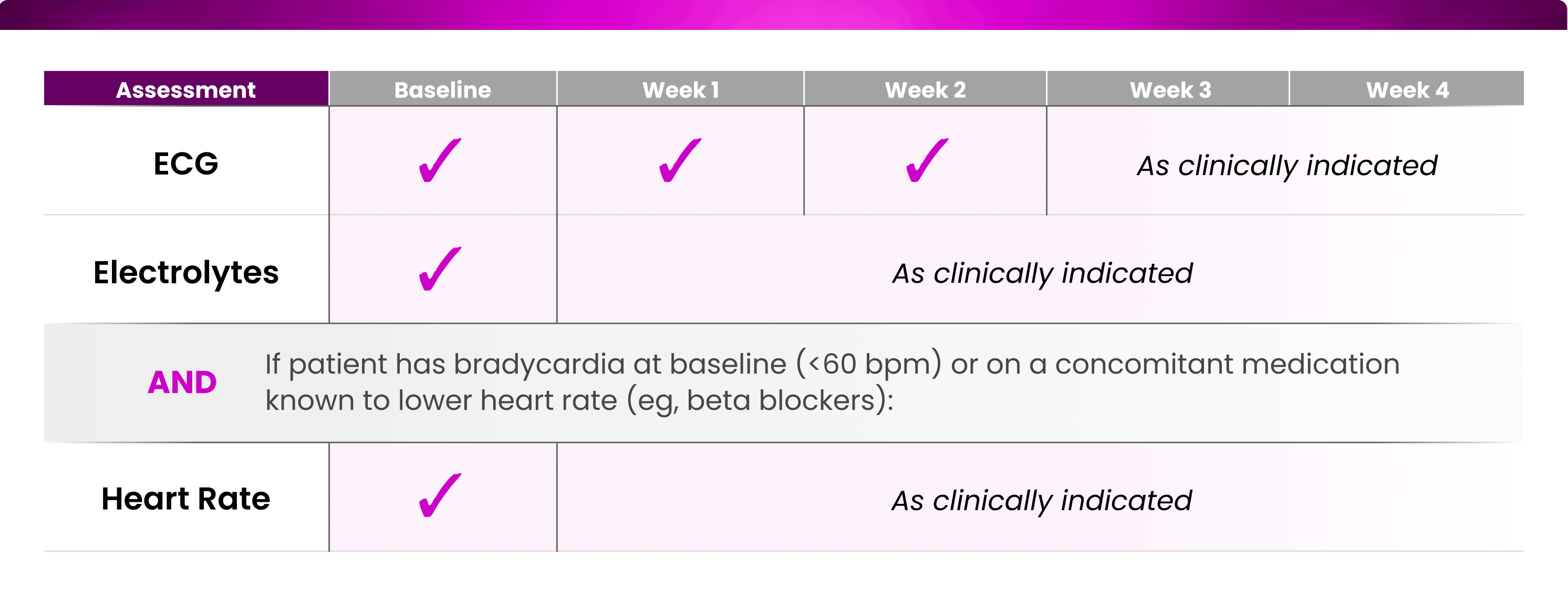
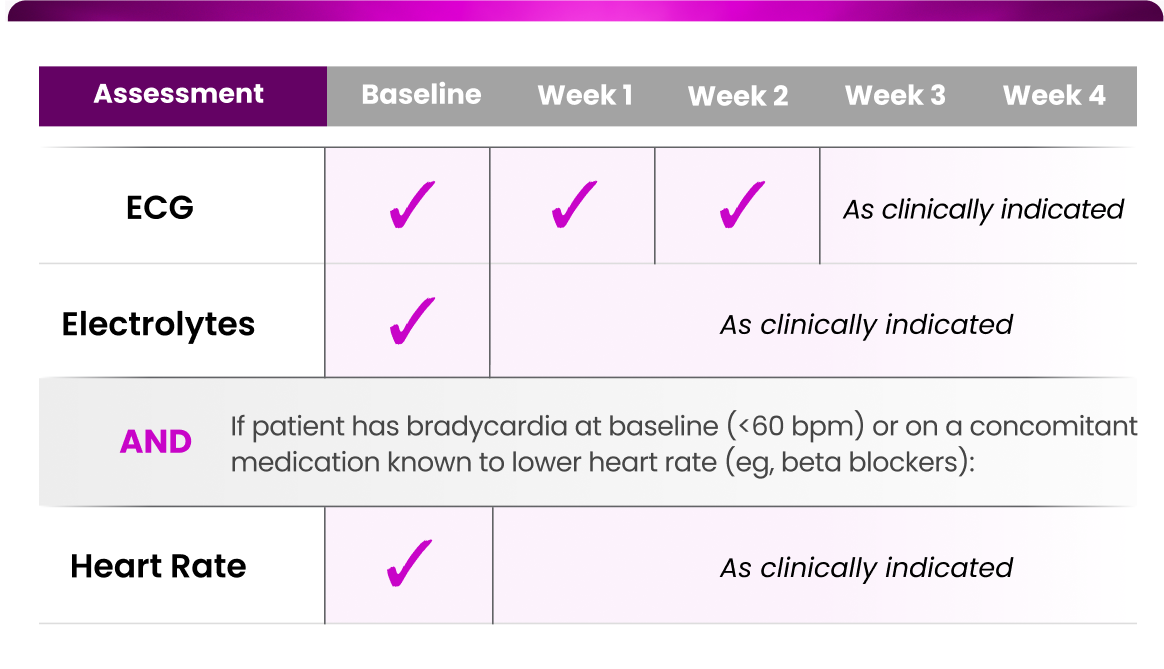
- Perform an electrocardiogram (ECG) prior to initiating ETCAMAH, then every week for the first 2 weeks of treatment, and periodically during treatment as clinically indicated
- Obtain serum electrolytes at baseline and during treatment as clinically indicated, and correct electrolyte abnormalities
- Monitor heart rate more frequently during the first 30 days of treatment with ETCAMAH in patients with bradycardia (resting heart rate less than 60 bpm) at baseline and those on concomitant medications known to lower heart rate (eg, beta‑blockers) if concomitant use cannot be avoided
Recommended dosage modifications of ETCAMAH for ARs1
- Dose modification of ETCAMAH due to adverse reactions occurred in 22% of patients. The adverse reactions (≥2%) leading to dose modifications were bradycardia (3.9%) and visual disturbances (2.6%)1
QTc Interval Prolongation
QTc >500 msec or
QTc >480 msec and
prolongation from
baseline >60 msec*
Withhold ETCAMAH.
If other contributing causes are identified, then treat or correct the contributing causes.
Resume ETCAMAH when QTc returns to <480 msec.
Reassess ECGs weekly for the first 2 weeks of treatment, and periodically during treatment as clinically indicated.
Permanently discontinue ETCAMAH if QTc interval prolongation is either >500 msec or >60 msec change from baseline AND associated with any of the following: Torsades de Pointes, polymorphic ventricular tachycardia, syncope, or signs/symptoms of serious arrhythmia.
Bradycardia†
Symptomatic, Grade 2 or above*
Withhold ETCAMAH until symptoms resolve.
Obtain ECG to evaluate etiology of symptomatic bradycardia.
If a contributing concomitant medication is identified, modify the dosage or discontinue this medication as appropriate until bradycardia symptoms resolve and then resume ETCAMAH.
Consider reassessing the heart rate after restart of ETCAMAH.
Permanently discontinue ETCAMAH for persistent symptomatic bradycardia.
Visual Disturbances‡
Grade 2 or above/limiting instrumental ADLs*
Withhold ETCAMAH until symptoms resolve to Grade 1 or below.
Refer patients to an eye care professional for an ophthalmic examination and treatment. Reassess visual disturbances at the next visit.
Other Adverse Reactions
Grade 3 or higher*
Withhold ETCAMAH until resolution to Grade 2 or below, then resume ETCAMAH.
Permanently discontinue ETCAMAH for recurrence of Grade 3 or higher adverse reactions.
Refer to the full Prescribing Information for the coadministered CDK4/6 inhibitor for dose modification guidelines in the event of toxicity and other relevant safety information.1
*Severity as defined by NCI CTCAE version 5.0.1
†Bradycardia includes bradycardia and sinus bradycardia.1
‡Visual disturbances include: photopsia, vision blurred, visual field defect, visual acuity decreased, visual impairment, diplopia, photophobia, and visual perseveration.1
ADL=activities of daily living; AR=adverse reactions; CDK4/6i=cyclin-dependent kinase 4/6 inhibitor; CTCAE=Common Terminology Criteria for Adverse Events; ESR1m=estrogen receptor 1 gene mutation; FDA=Food and Drug Administration; NCI=National Cancer Institute.
Reference:
- ETCAMAH® (camizestrant) [prescribing information]. Wilmington, DE: AstraZeneca Pharmaceuticals LP; 2026.


 For US healthcare professionals