


No increased risk of clinically meaningful changes in visual acuity12,13,25
- No or negligible impact on ability to drive or use machines
For patients with HR+/HER2- mBC, the 1L treatment phase is a unique window of opportunity to maximize time on endocrine therapy, where patients reported being able to maintain quality of life, as well as fewer impairments in daily activities, for longer. As a frontline advocate on the care team, you may have the power to help patients stay on their 1L CDK4/6i regimen longer.1-10
When an ESR1 mutation is first detected, it can quietly begin to limit the effectiveness of 1L ET, even before symptoms worsen.10-12


ETCAMAH in combination with a CDK4/6i (ribociclib, abemaciclib, or palbociclib) for the treatment of adult patients with HR+/HER2− aBC or mBC upon detection of ESR1m during first-line endocrine-based therapy based on an FDA-approved test. Under accelerated approval in combination with a CDK4/6i for HR+/HER2- mBC upon ESR1m detection during AI + CDK4/6i. Clinical benefit to be verified in confirmatory trials.13
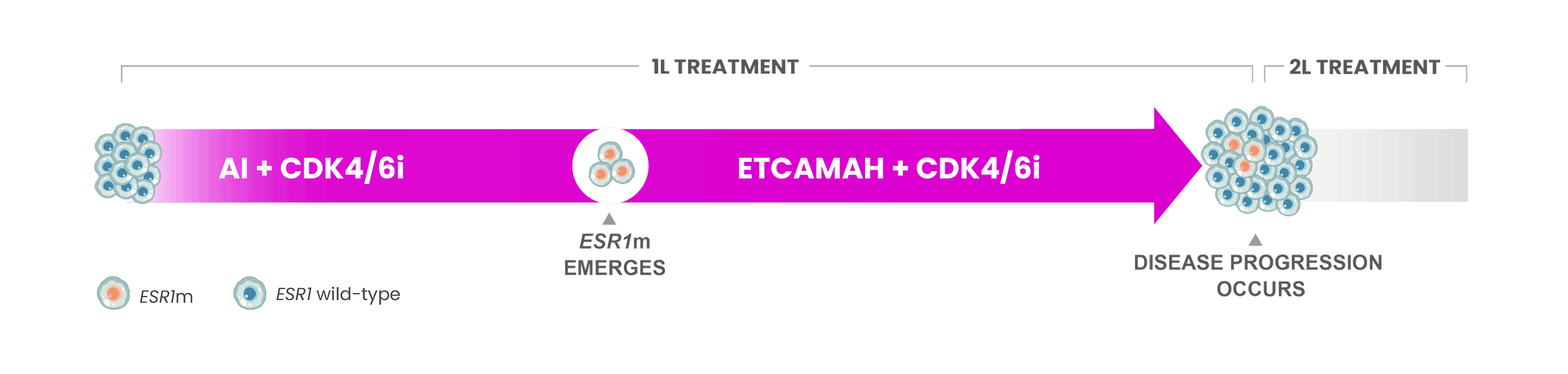
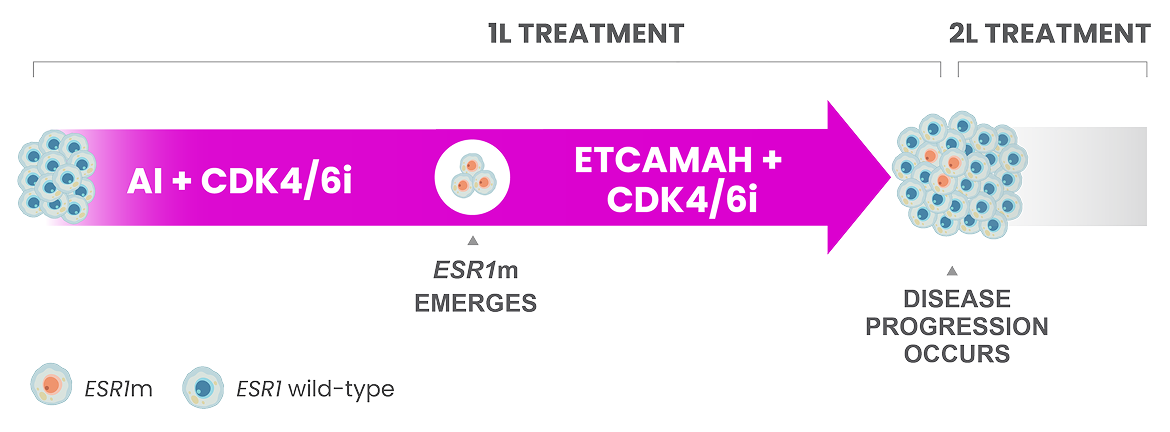
By proactively identifying ESR1 mutations with ctDNA and switching to ETCAMAH + CDK4/6i at the earliest sign, you may be able to help your patients12:
1
1L + CDK4/6i exposure
2
ESR1m detection
3
Early intervention with ETCAMAH
For illustrative purposes

Stay proactive against progression: Intervene at ESR1m detection for the opportunity to extend time on 1L CDK4/6i12
*After 23.1 months median time on AI + CDK4/6i, the median progression-free survival from time of ctDNA-guided switch: HR=0.44 (95% CI: 0.31-0.60; (P<0.0001) 16 months for patients on ETCAMAH + CDK4/6i (95% CI: 12.7-18.2) vs 9.2 months for patients on AI + CDK4/6i (95% CI: 7.2-9.5).12,13
Your essential role in early intervention and ETCAMAH + CDK4/6i treatment
| How your role helps | Why it matters for patients |
|---|---|
| Explain the potential benefit of early intervention | Patients may wonder why treatment is changing before disease progression and the impact this may have on 1L outcomes.13 |
| Discuss ctDNA monitoring | ctDNA testing (liquid biopsy) can detect ESR1 mutations before disease progression.12 |
| Support medication adherence | ETCAMAH is a once-daily pill taken by mouth at the same time each day, in combination with any FDA-approved CDK4/6i. Patients should take ETCAMAH exactly as instructed by their doctor.13 |
| Monitor for adverse reactions | Patients will work with you and the healthcare team to help manage any potential adverse reactions and dosing modifications.13 |
| Empower active participation | Patients may feel anxious about ctDNA testing and switching therapy before disease progression. You can discuss with them that ETCAMAH may help delay disease progression and may extend their time without progression on 1L CDK4/6i.13,19 |
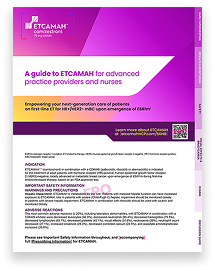
For more information about ETCAMAH, download our ETCAMAH Advanced Practice Provider and Nurse Brochure
ETCAMAH mechanism of action
Dual-action effect on estrogen receptors12,20
ETCAMAH, a potent, next-generation oral SERD, blocks and degrades both ESR1wt and ESR1m receptors
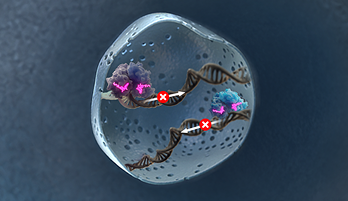
Complete ER antagonism
effectively blocks estrogen from binding to the receptor20

Potent ER degradation
reduces the pool of ERs available for downstream signaling20
Mechanism of action based on preclinical research.
The dual-action mechanism of ETCAMAH can potentially address endocrine resistance20,21
Liquid biopsy (blood test) to detect ESR1m can identify early signs of potential treatment resistance and help healthcare providers intervene before breast cancer progresses.12,13,22

WhoPatients with HR+/HER2- mBC on 1L Al + CDK4/6i for ≥6 months12

WhenAdd ESR1m testing to routine bloodwork every 3 months13

HowDetect ESR1m with ctDNA via liquid biopsy, using an FDA-authorized test13,22
Monitor your existing patients for ESR1m.
Intervene during 1L to stay ahead of disease progression12
For more information about monitoring, download our ETCAMAH ESR1m Monitoring Guide for HCPs
Upon ESR1m detection,
Switch to ETCAMAH–a convenient, once-daily tablet taken in combination with any FDA-approved CDK4/6i13

*For patients with severe hepatic impairment receiving ETCAMAH in combination with ribociclib, dose 75 mg once every other day.13
Avoid concomitant use of strong CYP3A inducers, and moderate CYP3A inducers when combining ETCAMAH with abemaciclib or palbociclib. If concomitant use of a moderate CYP3A inducer cannot be avoided, dose modifications will differ based on the CDK4/6i used.13

Take once daily at the same time each day
If a dose of ETCAMAH is missed, instruct the patient to take the missed dose within 6 hours or skip the missed dose if more than 6 hours have passed. The next dose should be taken at the usual time the following day. If the patient vomits a dose of ETCAMAH, instruct the patient not to take an additional dose and to take the next dose at the usual time.

Swallow the tablet whole
Do not crush, chew, or split tablets prior to swallowing. Do not take any ETCAMAH tablets that are broken, cracked, or otherwise not intact.
Please see full Prescribing Information for drug interactions, dosing, and administration. Refer to the full Prescribing Information of the CDK4/6i or other concomitant medications for dosing.
The recommended dose of a CDK4/6 inhibitor is continued at the same dose at the time of initiation of ETCAMAH as when the ESR1m was detected.13
†Until disease progression or unacceptable toxicity.13
For specific populations,
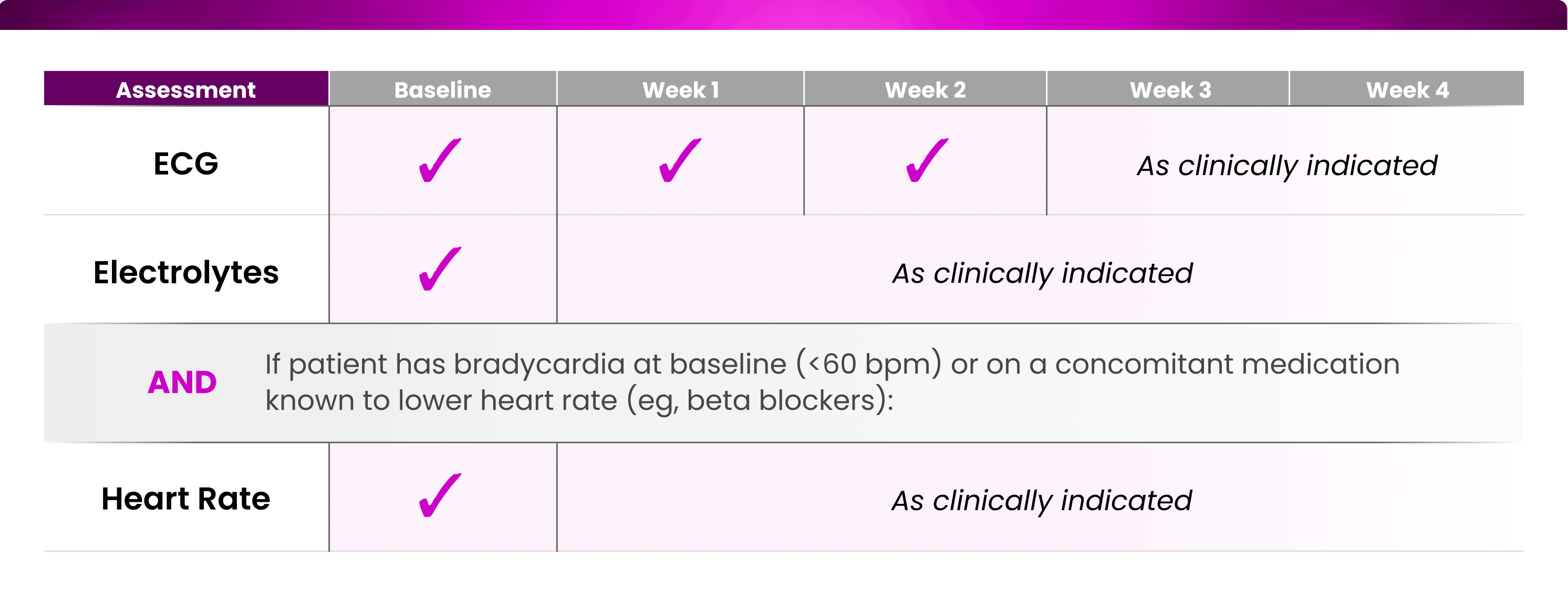
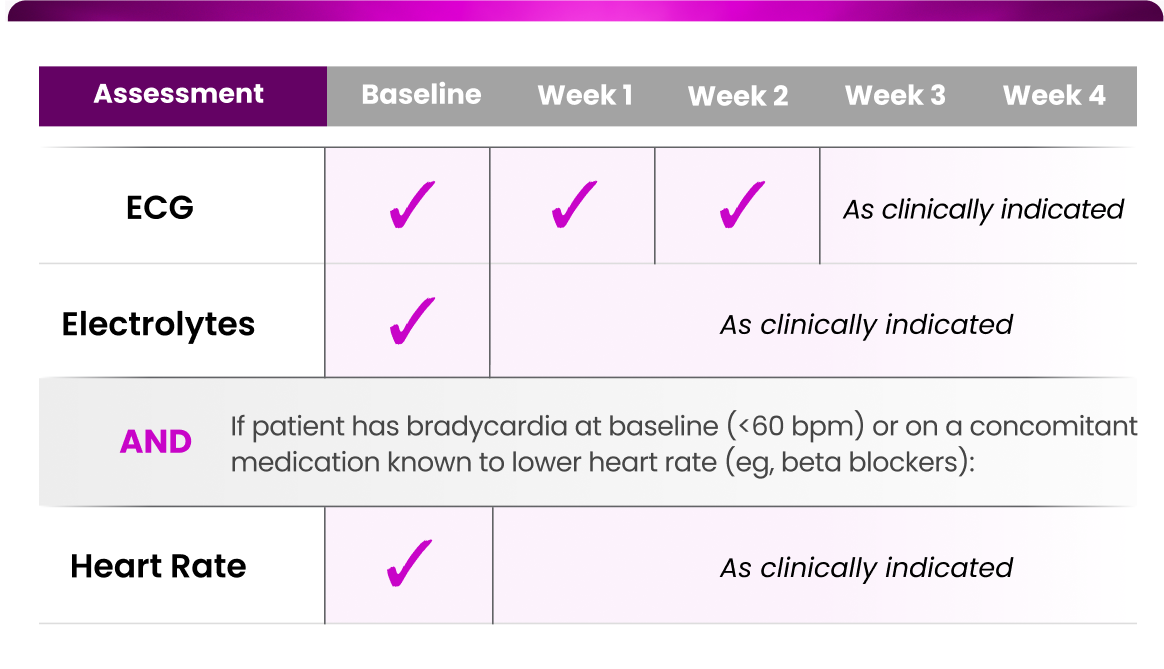
Cardiac assessments for ETCAMAH should be completed within the first month of therapy13
In SERENA-6,
Additional safety and tolerability data13
Laboratory abnormalities (≥10% of patients)1,*,† | ETCAMAH + CDK4/6i (n=155) |
| AI + CDK4/6i (n=155) | ||
All grades, % | Grade ≥3, % |
| All grades, % | Grade ≥3, % | |
| Hematology |
|
|
|
|
|
| Neutrophils decreased | 68 | 42 |
| 66 | 39 |
| Leukocytes decreased | 66 | 23 |
| 58 | 17 |
| Hemoglobin decreased | 47 | 3.9 |
| 38 | 5 |
| Lymphocytes decreased | 39 | 9 |
| 37 | 8 |
| Platelets decreased | 36 | 2.6 |
| 30 | 1.3 |
| Chemistry |
|
|
|
|
|
| Aspartate aminotransferase increased | 17 | 2.6 |
| 29 | 1.3 |
| Corrected calcium decreased | 17 | 0 |
| 12 | 0.7 |
| Creatinine increased | 16 | 0.6 |
| 20 | 1.3 |
| Gamma glutamyl transferase increased | 12 | 2.7 |
| 23 | 8 |
| Alanine aminotransferase increased | 12 | 1.3 |
| 20 | 0 |
| Creatine kinase increased | 12 | 0 |
| 6 | 0 |
| Alkaline phosphatase increased | 10 | 0.7 |
| 22 | 0.7 |
*Graded according to NCI CTCAE version 5.0.13
†Includes patients with at least one on‑treatment postbaseline result.13
<1% of patients had a dose modification due to liver toxicity13,‡
‡0.6% permanently discontinued due to hepatic cytolysis.13
In SERENA-6,
Cardiac events associated with ETCAMAH were generally low grade and reversible13


Low incidence - 8%13


No grade 3 or above
events reported12
(Grade 1–5.2%; Grade 2–2.6%)


No medical
interventions
were
required beyond
dose interruption13


Median time to onset was
17
days (range: 13-283)
Maximum decrease
in heart rate observed
on day 1513
Patients with bpm <55 were excluded in SERENA-6.
Low incidence - 2.6%13
Generally low grade23,24
(Grade 1–1.3%; Grade 2–0.6%; Grade 3–0.6%)
In a dose-finding trial, a Grade 4
Torsades de Pointes was observed in one
patient with confounding factors receiving ETCAMAH + ribociclib


No clinically meaningful arrhythmia reported28


Reversible with
dose interruption23
Please see full Prescribing Information for additional information on cardiac monitoring, dose modifications, and drug interactions.
Dose interruptions13
How to grade bradycardia (CTCAE criteria)13,*:
Grade 1
Grade 2
Management of bradycardia13,†
Management of bradycardia13,†
Grade 1
No intervention needed.
Grade ≥2*
Withhold ETCAMAH until symptoms resolve.
Obtain ECG to evaluate etiology of symptomatic bradycardia.
If a contributing concomitant medication is identified, modify the dosage or discontinue this medication as appropriate until bradycardia symptoms resolve and then resume ETCAMAH.
Consider reassessing the heart rate after restart of ETCAMAH dosing.
Permanently discontinue ETCAMAH for persistent symptomatic bradycardia.
*Grading according to NCI CTCAE version 5.0. Grade 1: Asymptomatic, intervention not indicated; Grade 2: Symptomatic, intervention not indicated; change in medication.13
†Bradycardia includes bradycardia and sinus bradycardia.13
In SERENA-6,
Visual disturbances were reported to have no or generally minimal effect on patients' daily activities12,13
In patients who reported visual disturbances12,13,25,*:
The vast majority were grade 1
and not impacting activities of daily living
*34% of patients in the ETCAMAH + CDK4/6i arm (n=155) and 16% of patients in the AI + CDK4/6i arm (n=155).25

No increased risk of clinically meaningful changes in visual acuity12,13,25

No baseline eye exam required13
No patients discontinued ETCAMAH due to visual disturbances13
2.6% of patients had a dose interruption due to visual disturbances13
The most common visual disturbances was photopsia, which is the perception of flashing or flickering lights without an external stimulus.12
| ETCAMAH + CDK4/6i (n=155) All grades, % | AI + CDK4/6i (n=155) All grades, % | |
| Visual disturbances | 34 | 16 |
| Photopsia | 20 | 7.7 |
| Vision blurred | 7.1 | 7.1 |
| Visual impairment | 3.9 | 1.9 |
| Diplopia | 1.9 | 1.3 |
| Photophobia | 1.9 | 0 |
| Visual perseveration | 1.3 | 0 |
How to grade photopsia (CTCAE criteria)13,27,II:
Grade 1
Grade 2
Grade 3
Management of visual disturbances13,¶
Management of visual disturbances¶
Grade 1
No intervention needed.
Grade ≥2II
Withhold ETCAMAH until symptoms resolve to Grade 1 or below.
Refer the patient to an eye care professional if visual symptoms are progressive, persistent, or interfere with instrumental ADLs. Reassess visual disturbances at the next visit.
†Grade 2: Limiting instrumental ADL; Grade 3: Limiting self-care ADL.13
‡The NEI-VFQ-25 assesses how visual function affects daily activities and overall vision-related QoL. This questionnaire comprises 11 subscales. Adherence was calculated for each timepoint and was defined as the number of patients with an evaluable questionnaire (≥1 subscale completed) divided by the total number of patients expected to complete the questionnaire at that timepoint. At baseline, 69% of patients in the ETCAMAH + CDK4/6i arm and 59% of patients in the AI + CDK4/6i arm completed ≥1 subscale of the NEI-VFQ-25.25
§Based on ophthalmological review of patients reporting visual disturbances.12
Findings from the VSAQ and NEI-VFQ-25 are exploratory and descriptive, intended to characterize patient-reported visual symptoms and function and may be subject to inherent limitations of PRO measures. Clinicians should apply their own judgment. These questionnaires were not designed to evaluate early visual disability; results may underrepresent such impairments.
IISeverity as defined by NCI CTCAE version 5.0.13
¶Visual disturbances include: photopsia, blurred vision, visual field defect, decreased visual acuity, visual impairment, diplopia, photophobia and visual preservation.13
Advise your patients to inform their healthcare team of all the medications that will be taken with ETCAMAH, including prescription medicines, over-the-counter medicines, vitamins, and herbal medicines.
Clinical impact
Prevention/management
CYP3A4/5 inducers
CYP2C9 and/or CYP2C19 substrates
CYP3A4/5 substrates
Drug Products Known to Prolong the QT Interval
For additional information on drug interactions with ETCAMAH, please see Full Prescribing Information .
.
1L=first line; 2L=second line; aBC=inoperable locally advanced or metastatic breast cancer; ADL=activities of daily living; AI=aromatase inhibitor; AR=adverse reaction; CDK4/6i=cyclin-dependent kinase 4/6 inhibitor; CTCAE=Common Terminology Criteria for Adverse Events; ctDNA=circulating tumor DNA; ER=estrogen receptor; ESR1=estrogen receptor 1; ESR1m=estrogen receptor 1 gene mutation; ESR1wt=estrogen receptor 1 wild-type; ET=endocrine therapy; FDA=Food and Drug Administration; HER2−=human epidermal growth factor receptor 2–negative; HR+=hormone receptor–positive; mBC=metastatic breast cancer; NCI=National Cancer Institute; NEI-VFQ-25=National Eye Institute Visual Function Questionnaire-25; PRO=patient-reported outcome; SERD=selective estrogen receptor degrader; VSAQ=Visual Symptom Assessment Questionnaire.
References:
Photopsia is the perception of flashing or flickering lights without an external stimulus. In the SERENA-6 trial, this symptom was typically observed in the periphery and was not associated with structural eye abnormalities.2


Reference: Dorland's Illustrated Medical Dictionary.
INDICATION
IMPORTANT SAFETY INFORMATION INCLUDING BOXED WARNING
WARNING: ARRHYTHMIA RISK WITH CONCOMITANT USE OF QTc INTERVAL PROLONGING DRUGS
ETCAMAH in combination with ribociclib, a QTc interval prolonging drug and a strong CYP3A inhibitor, or in combination with other QTc interval prolonging drugs, can increase the risk of Torsades de Pointes (TdP), other ventricular arrhythmias, and sudden death.
Avoid concomitant use of ETCAMAH with products (other than ribociclib) known to prolong the QTc interval and/or have a known risk of TdP. If concomitant use with other products cannot be avoided, monitor the QTc interval more frequently.
Obtain electrocardiogram (ECG) prior to initiation and monitor heart rate (HR) and QTc interval during treatment. Assess and correct electrolyte abnormalities prior to initiation and during treatment. Withhold ETCAMAH until resolution of QTc interval prolongation and resume or permanently discontinue ETCAMAH based on severity.
WARNINGS AND PRECAUTIONS
QTc Interval Prolongation: ETCAMAH in combination with a CDK4/6 inhibitor (CDK4/6i) is associated with QTc interval prolongation. When ETCAMAH is used in combination with ribociclib, a CDK4/6i, there is potential for increased risk of TdP, other ventricular arrhythmias, and sudden death. One Grade 4 case of TdP was observed in a dose-finding trial when ETCAMAH was used with ribociclib. In SERENA-6, QTc interval prolongation occurred in 2.6% of patients treated with ETCAMAH in combination with a CDK4/6i. QTc interval prolongation led to dose interruption in 0.6% of patients. No patients in SERENA-6 discontinued ETCAMAH due to QTc interval prolongation. ETCAMAH also causes bradycardia, which increases the risk of QTc interval prolongation.
Perform an ECG prior to initiating ETCAMAH, then every week for the first 2 weeks of treatment, and periodically during treatment as clinically indicated. Obtain serum electrolytes at baseline and during treatment as clinically indicated, and correct electrolyte abnormalities. Avoid concomitant use of ETCAMAH in combination with a CDK4/6i with products that cause QTc interval prolongation, are strong CYP3A inhibitors, and/or are drugs known to lower HR.
For QTc >500 msec or QTc >480 msec and prolongation from baseline >60 msec, withhold ETCAMAH. If other contributing causes are identified, then treat or correct the contributing causes. Resume ETCAMAH when QTc returns to <480 msec. Reassess ECGs weekly for the first 2 weeks of treatment, and periodically during treatment as clinically indicated. Permanently discontinue ETCAMAH if QTc interval prolongation is either >500 msec or >60 msec change from baseline AND associated with any: TdP, polymorphic ventricular tachycardia, syncope, or signs/symptoms of serious arrhythmia.
Bradycardia: ETCAMAH causes a decrease in HR. Bradycardia increases the risk for life-threatening arrhythmias and sudden death when concomitant QTc interval prolongation is present, such as when ETCAMAH is used in combination with ribociclib, both a QTc interval prolonging product and a strong CYP3A inhibitor. In SERENA-6, bradycardia occurred in 8% of patients. The mean HR decrease from baseline was approximately 13 beats per minute (bpm) with the maximum decrease observed on day 15. Median time to onset was 17 days (range 13 to 283) after starting ETCAMAH. No patients discontinued ETCAMAH due to bradycardia. Dose interruption occurred in 3.9% of patients. The safety of ETCAMAH has not been established in patients with a baseline resting HR <55 bpm as these patients were excluded from SERENA-6. Monitor HR more frequently during the first 30 days of treatment in patients with bradycardia (HR <60 bpm) at baseline and those on concomitant medications known to lower HR (eg, beta-blockers).
For symptomatic (Grade 2 or above) bradycardia, withhold ETCAMAH until symptoms resolve. Obtain ECG to evaluate etiology. If a contributing concomitant medication is identified, modify the dosage or discontinue this medication, as appropriate, until bradycardia symptoms resolve, then resume ETCAMAH. Consider reassessing the HR after restart. Permanently discontinue for persistent symptomatic bradycardia.
Embryo-Fetal Toxicity: Based on findings in animals and its mechanism of action, ETCAMAH can cause fetal harm when administered to a pregnant woman. Advise pregnant women and females of reproductive potential of the potential risk to a fetus. Advise females of reproductive potential to use effective non-hormonal contraception during treatment with ETCAMAH and for 4 weeks after the last dose. Advise male patients with female partners of reproductive potential to use effective contraception during treatment with ETCAMAH and for 1 week after the last dose.
ADVERSE REACTIONS
The most common (≥20%) adverse reactions, including laboratory abnormalities, with ETCAMAH in combination with a CDK4/6i were decreased neutrophils (68%), decreased leukocytes (66%), decreased hemoglobin (47%), decreased lymphocytes (39%), decreased platelets (36%), visual disturbances (34%), and fatigue (23%).
Permanent discontinuation due to adverse reactions occurred in 1.3% of patients. Adverse reactions that resulted in permanent discontinuation of ETCAMAH included gastroesophageal reflux disease, cholestasis and hepatic cytolysis (0.6% each). Dosage interruption of ETCAMAH due to adverse reactions occurred in 22% of patients.
Visual disturbances: For visual disturbances limiting instrumental ADLs (activities of daily living) (Grade 2) or above, withhold ETCAMAH until symptoms resolve to Grade 1 or below. Refer to an eye professional for an ophthalmic examination and treatment and reassess at the next visit.
For other Grade 3 or higher adverse reactions: Withhold ETCAMAH until resolution to Grade 2 or below, then resume. Permanently discontinue for recurrence of Grade 3 or higher adverse reactions.
DRUG INTERACTIONS
Refer to the Prescribing Information for the co-administered CDK4/6i for dosage modification guidelines related to adverse reactions, organ impairment, and drug-drug interactions.
SPECIAL POPULATIONS
Pregnancy: Based on findings in animals and mechanism of action, ETCAMAH can cause fetal harm when administered to a pregnant woman. Advise pregnant women and females of reproductive potential of the potential risk to a fetus.
Lactation: Because of the potential for serious adverse reactions in a breastfed child, advise women not to breastfeed during treatment with ETCAMAH and for 1 week after the last dose.
Females and Males of Reproductive Potential: ETCAMAH can cause fetal harm when administered to pregnant women. Verify pregnancy status of female patients of reproductive potential prior to initiating ETCAMAH. Advise female patients of reproductive potential to use effective non-hormonal contraception during treatment with ETCAMAH and for 4 weeks after the last dose. Advise male patients with female partners of reproductive potential to use effective contraception during treatment with ETCAMAH and for 1 week after the last dose. Refer to the Prescribing Information of the CDK4/6i palbociclib, if used in combination with ETCAMAH, for contraception information and use for the longest recommended post-treatment duration. ETCAMAH may impair fertility in female and male patients.
Pediatric Use: Safety and effectiveness have not been established in pediatric patients.
Hepatic Impairment: In patients with severe (Child-Pugh C) hepatic impairment, when ETCAMAH is combined with ribociclib, reduce the dosing frequency to every other day.
No dosage modifications are required in other patients with hepatic impairment of any level, or when ETCAMAH is combined with abemaciclib or palbociclib, although patients with moderate or severe hepatic impairment (Child-Pugh B or C) should be monitored for increased adverse reactions and dosage modified as recommended.
INDICATION
ETCAMAH in combination with a CDK4/6 inhibitor (abemaciclib, palbociclib, or ribociclib) is indicated for the treatment of adult patients with hormone receptor (HR)-positive, human epidermal growth factor receptor 2 (HER2)-negative, locally advanced or metastatic breast cancer upon detection of ESR1 mutation during aromatase inhibitor and CDK4/6 inhibitor therapy, based on an FDA-authorized test.
This indication is approved under accelerated approval based on progression-free survival as measured from detection of ESR1 mutation. Continued approval for this indication may be contingent upon verification and description of clinical benefit in a confirmatory trial(s).
Please see full Prescribing Information, including Boxed WARNING, and Patient Information for ETCAMAH.
You may report side effects related to AstraZeneca products .
.
INDICATION
ETCAMAH in combination with a CDK4/6 inhibitor (abemaciclib, palbociclib, or ribociclib) is indicated for the treatment of adult patients with hormone receptor (HR)-positive, human epidermal growth factor receptor 2 (HER2)-negative, locally advanced or metastatic breast cancer upon detection of ESR1 mutation during aromatase inhibitor and CDK4/6 inhibitor therapy, based on an FDA-authorized test.
This indication is approved under accelerated approval based on progression-free survival as measured from detection of ESR1 mutation. Continued approval for this indication may be contingent upon verification and description of clinical benefit in a confirmatory trial(s).
Important safety information
IMPORTANT SAFETY INFORMATION INCLUDING BOXED WARNING
WARNING: ARRHYTHMIA RISK WITH CONCOMITANT USE OF QTc INTERVAL PROLONGING DRUGS
ETCAMAH in combination with ribociclib, a QTc interval prolonging drug and a strong CYP3A inhibitor, or in combination with other QTc interval prolonging drugs, can increase the risk of Torsades de Pointes (TdP), other ventricular arrhythmias, and sudden death.
Avoid concomitant use of ETCAMAH with products (other than ribociclib) known to prolong the QTc interval and/or have a known risk of TdP. If concomitant use with other products cannot be avoided, monitor the QTc interval more frequently.
Obtain electrocardiogram (ECG) prior to initiation and monitor heart rate (HR) and QTc interval during treatment. Assess and correct electrolyte abnormalities prior to initiation and during treatment. Withhold ETCAMAH until resolution of QTc interval prolongation and resume or permanently discontinue ETCAMAH based on severity.
WARNINGS AND PRECAUTIONS
QTc Interval Prolongation: ETCAMAH in combination with a CDK4/6 inhibitor (CDK4/6i) is associated with QTc interval prolongation. When ETCAMAH is used in combination with ribociclib, a CDK4/6i, there is potential for increased risk of TdP, other ventricular arrhythmias, and sudden death. One Grade 4 case of TdP was observed in a dose-finding trial when ETCAMAH was used with ribociclib. In SERENA-6, QTc interval prolongation occurred in 2.6% of patients treated with ETCAMAH in combination with a CDK4/6i. QTc interval prolongation led to dose interruption in 0.6% of patients. No patients in SERENA-6 discontinued ETCAMAH due to QTc interval prolongation. ETCAMAH also causes bradycardia, which increases the risk of QTc interval prolongation.
Perform an ECG prior to initiating ETCAMAH, then every week for the first 2 weeks of treatment, and periodically during treatment as clinically indicated. Obtain serum electrolytes at baseline and during treatment as clinically indicated, and correct electrolyte abnormalities. Avoid concomitant use of ETCAMAH in combination with a CDK4/6i with products that cause QTc interval prolongation, are strong CYP3A inhibitors, and/or are drugs known to lower HR.
For QTc >500 msec or QTc >480 msec and prolongation from baseline >60 msec, withhold ETCAMAH. If other contributing causes are identified, then treat or correct the contributing causes. Resume ETCAMAH when QTc returns to <480 msec. Reassess ECGs weekly for the first 2 weeks of treatment, and periodically during treatment as clinically indicated. Permanently discontinue ETCAMAH if QTc interval prolongation is either >500 msec or >60 msec change from baseline AND associated with any: TdP, polymorphic ventricular tachycardia, syncope, or signs/symptoms of serious arrhythmia.
Bradycardia: ETCAMAH causes a decrease in HR. Bradycardia increases the risk for life-threatening arrhythmias and sudden death when concomitant QTc interval prolongation is present, such as when ETCAMAH is used in combination with ribociclib, both a QTc interval prolonging product and a strong CYP3A inhibitor. In SERENA-6, bradycardia occurred in 8% of patients. The mean HR decrease from baseline was approximately 13 beats per minute (bpm) with the maximum decrease observed on day 15. Median time to onset was 17 days (range 13 to 283) after starting ETCAMAH. No patients discontinued ETCAMAH due to bradycardia. Dose interruption occurred in 3.9% of patients. The safety of ETCAMAH has not been established in patients with a baseline resting HR <55 bpm as these patients were excluded from SERENA-6. Monitor HR more frequently during the first 30 days of treatment in patients with bradycardia (HR <60 bpm) at baseline and those on concomitant medications known to lower HR (eg, beta-blockers).
For symptomatic (Grade 2 or above) bradycardia, withhold ETCAMAH until symptoms resolve. Obtain ECG to evaluate etiology. If a contributing concomitant medication is identified, modify the dosage or discontinue this medication, as appropriate, until bradycardia symptoms resolve, then resume ETCAMAH. Consider reassessing the HR after restart. Permanently discontinue for persistent symptomatic bradycardia.
Embryo-Fetal Toxicity: Based on findings in animals and its mechanism of action, ETCAMAH can cause fetal harm when administered to a pregnant woman. Advise pregnant women and females of reproductive potential of the potential risk to a fetus. Advise females of reproductive potential to use effective non-hormonal contraception during treatment with ETCAMAH and for 4 weeks after the last dose. Advise male patients with female partners of reproductive potential to use effective contraception during treatment with ETCAMAH and for 1 week after the last dose.
ADVERSE REACTIONS
The most common (≥20%) adverse reactions, including laboratory abnormalities, with ETCAMAH in combination with a CDK4/6i were decreased neutrophils (68%), decreased leukocytes (66%), decreased hemoglobin (47%), decreased lymphocytes (39%), decreased platelets (36%), visual disturbances (34%), and fatigue (23%).
Permanent discontinuation due to adverse reactions occurred in 1.3% of patients. Adverse reactions that resulted in permanent discontinuation of ETCAMAH included gastroesophageal reflux disease, cholestasis and hepatic cytolysis (0.6% each). Dosage interruption of ETCAMAH due to adverse reactions occurred in 22% of patients.
Visual disturbances: For visual disturbances limiting instrumental ADLs (activities of daily living) (Grade 2) or above, withhold ETCAMAH until symptoms resolve to Grade 1 or below. Refer to an eye professional for an ophthalmic examination and treatment and reassess at the next visit.
For other Grade 3 or higher adverse reactions: Withhold ETCAMAH until resolution to Grade 2 or below, then resume. Permanently discontinue for recurrence of Grade 3 or higher adverse reactions.
DRUG INTERACTIONS
Refer to the Prescribing Information for the co-administered CDK4/6i for dosage modification guidelines related to adverse reactions, organ impairment, and drug-drug interactions.
SPECIAL POPULATIONS
Pregnancy: Based on findings in animals and mechanism of action, ETCAMAH can cause fetal harm when administered to a pregnant woman. Advise pregnant women and females of reproductive potential of the potential risk to a fetus.
Lactation: Because of the potential for serious adverse reactions in a breastfed child, advise women not to breastfeed during treatment with ETCAMAH and for 1 week after the last dose.
Females and Males of Reproductive Potential: ETCAMAH can cause fetal harm when administered to pregnant women. Verify pregnancy status of female patients of reproductive potential prior to initiating ETCAMAH. Advise female patients of reproductive potential to use effective non-hormonal contraception during treatment with ETCAMAH and for 4 weeks after the last dose. Advise male patients with female partners of reproductive potential to use effective contraception during treatment with ETCAMAH and for 1 week after the last dose. Refer to the Prescribing Information of the CDK4/6i palbociclib, if used in combination with ETCAMAH, for contraception information and use for the longest recommended post-treatment duration. ETCAMAH may impair fertility in female and male patients.
Pediatric Use: Safety and effectiveness have not been established in pediatric patients.
Hepatic Impairment: In patients with severe (Child-Pugh C) hepatic impairment, when ETCAMAH is combined with ribociclib, reduce the dosing frequency to every other day.
No dosage modifications are required in other patients with hepatic impairment of any level, or when ETCAMAH is combined with abemaciclib or palbociclib, although patients with moderate or severe hepatic impairment (Child-Pugh B or C) should be monitored for increased adverse reactions and dosage modified as recommended.
INDICATION
ETCAMAH in combination with a CDK4/6 inhibitor (abemaciclib, palbociclib, or ribociclib) is indicated for the treatment of adult patients with hormone receptor (HR)-positive, human epidermal growth factor receptor 2 (HER2)-negative, locally advanced or metastatic breast cancer upon detection of ESR1 mutation during aromatase inhibitor and CDK4/6 inhibitor therapy, based on an FDA-authorized test.
This indication is approved under accelerated approval based on progression-free survival as measured from detection of ESR1 mutation. Continued approval for this indication may be contingent upon verification and description of clinical benefit in a confirmatory trial(s).
Please see full Prescribing Information, including Boxed WARNING, and Patient Information for ETCAMAH.
You may report side effects related to AstraZeneca products.
INDICATION
ETCAMAH in combination with a CDK4/6 inhibitor (abemaciclib, palbociclib, or ribociclib) is indicated for the treatment of adult patients with hormone receptor (HR)-positive, human epidermal growth factor receptor 2 (HER2)-negative, locally advanced or metastatic breast cancer upon detection of ESR1 mutation during aromatase inhibitor and CDK4/6 inhibitor therapy, based on an FDA-authorized test.
This indication is approved under accelerated approval based on progression-free survival as measured from detection of ESR1 mutation. Continued approval for this indication may be contingent upon verification and description of clinical benefit in a confirmatory trial(s).
 For US healthcare professionals